Instagram

Hello!

Hello!
My name is Jessica.
I am a momma, wife, teacher, queen of the Diet Coke, Jesus loving new to blogging gal.

Saturday, September 26, 2015

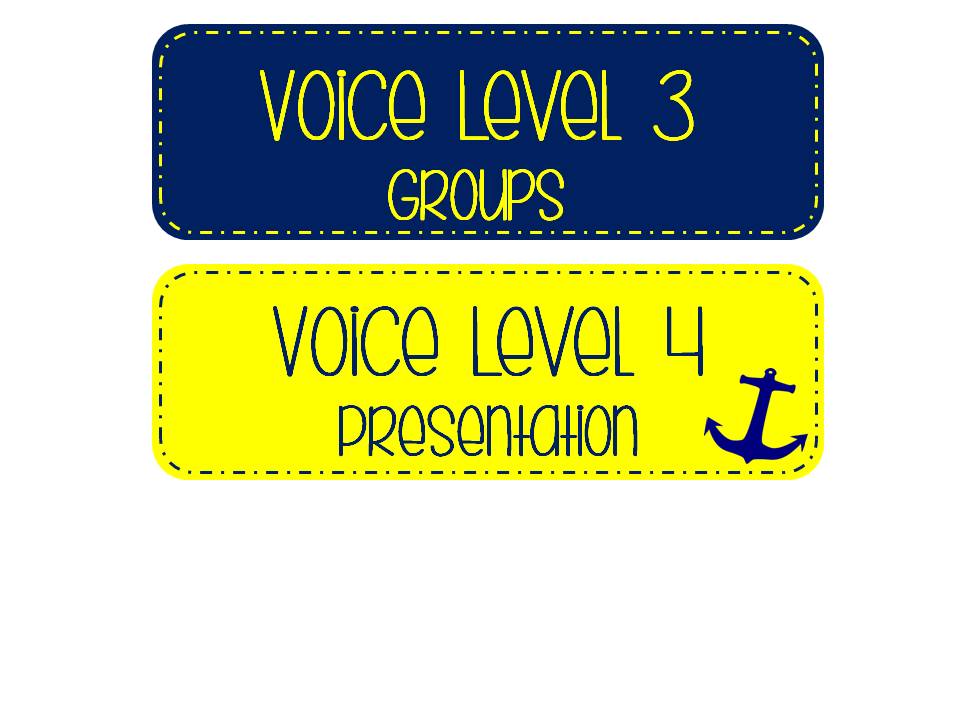
Classroom Management Voice Level Charts

 
When it comes to classroom management, I am a huge fan of visual aides! They are a nice reminder to students when they get off task and also allow a reminder throughout the class period on what the expectation is. One of the visuals I use is a Voice Level Chart. I have mine printed on cardstock, laminated, and glued to a ribbon. I move a clothespin to the level I expect the students voices to be on at that time. So far, this tool has worked great.  
Below I've posted a few color variations for you to print and enjoy!


Friday, September 25, 2015

Classroom Management- Finished Early Visual

As a middle school teacher, I find myself making sure I have the students working from start to finish to avoid any behavior issues or possible interruptions to the learning environment at hand. However, we all have those "early finishers" . You know, the ones who love to blurt out and announce that they have conquered the assignment so hear them roar kiddos. In hopes of eliminating this distractor, and saving yourself from repeating what they should work on I use a "Finished Early" visual aide.  I use this visual aide to ensure students know what to do on days they complete their task early. It allows the students to have a choice which gives them some ownership and responsibility of maintaining the peaceful classroom environment.
 Interested in trying this? Right click to save the pictures below and print on cardstock. (I laminate mine for durability.) Cut out the design and attach to ribbon in order, or simply hang in your room.


Wednesday, September 23, 2015

Ringing the Bell in Right

Managing the first five to ten minutes of class is a critical to the success of the entire period. Most teachers find themselves in a balancing act of attendance, catching students up, and transitioning from the last period. I've found that if students are not given a task while the above mentioned is handled, students tend to get off and stay off task for the remainder of the period. Therefore, I require daily Bell-work or Bell Ringers.
Students know that as soon as they enter the classroom they are required to complete the task on the board and that they will be held accountable.
I use the following log for students to complete Bell-work in.
Students are asked to place the handout in their notebooks or binders. If you use interactive notebooks you can have students glue it in.
I have eight spots for students to respond to Bell-work. 
Students include the date and response. I fill in the checked box with either a stamp, sticker, or check mark.
I collect the Bell-work bi-weekly. Each day is worth 25 points.
There are only four days per week provided, on Fridays, I have students participate in D.E,A.R. while I do a Bell-work check for the week. 
The log above helps cut down on the paper load and makes accountability easier to keep track of. 
What are different things you use to open your class?


Tuesday, September 15, 2015

Harrison Bergeron Day 7- Editing

Perhaps one of my favorite, yet most frustrating steps of the writing process is the editing and revising portion. Usually by this point students are ready to publish. However, I stress the importance of editing and revising and pull in examples from great writers to show how writing is never perfect the first time through.

Below are the steps for editing the writing portion of "Harrison Bergeron" in the 8th grade on a 45 minute class schedule. This is Day 7 of the unit. Take it, adapt it, and tweak it for your needs.

Begin by showing students several drafts of famous writers rough drafts. You can find several here. You can print, save as a pdf , or pull up website for students to view.

Ask the students if this is what they would expect to see from a published writer?
Explain how their papers are the same.

Next have students take out their interactive notebooks to edit their essays they have been working on. I use the following and break down the editing process paragraph by paragraph.


Once students have made sure they have included all of the above, I pass out the following
We then go back through each paragraph one at a time checking for the above errors.

Finally, once all editing has been completed, instruct students to type their essays in MLA format and assign a due date for their published draft.